WVU Extension Service Website Redesign & Migration
Managing the migration and restructuring of 5000+ pages and 8000+ digital assets for the third-largest website in the West Virginia University system.
Client
West Virginia University Extension Service
Year
2015
Role
Multimedia Specialist & Migration Lead
Project Overview
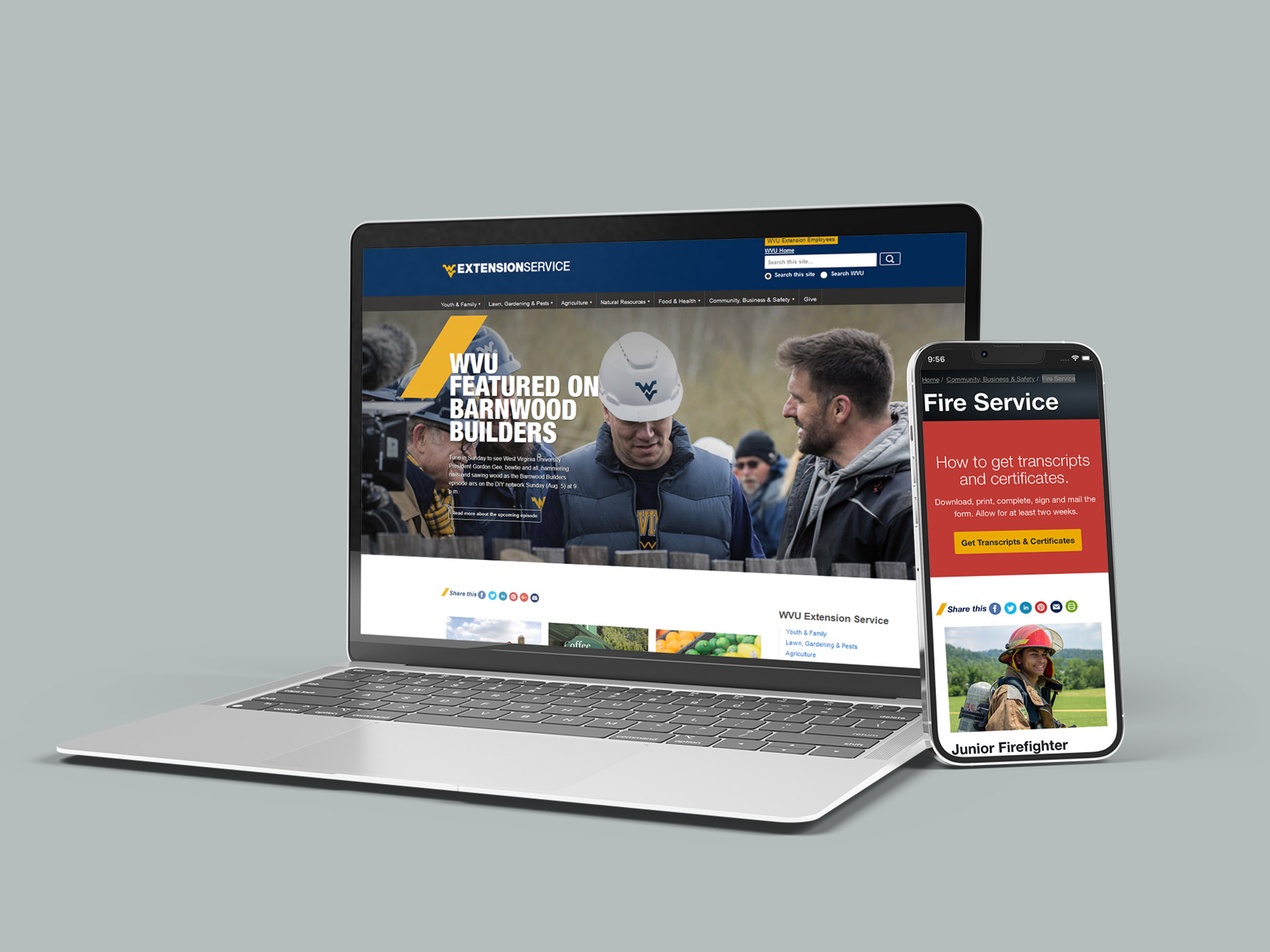
As the Multimedia Specialist for West Virginia University Extension Service, I was tasked with migrating their extensive website—the third largest within the University system—to a new platform while restructuring the information architecture to improve usability and accessibility.
This complex migration involved transferring and restructuring over 5,000 web pages and 8,000 digital assets, coordinating across multiple departments, maintaining ADA accessibility standards throughout, and ensuring content was logically organized and easily accessible for all users.
The Challenge
The WVU Extension Service website had grown organically over many years, resulting in content sprawl, inconsistent navigation, and structural issues that made information difficult to find. As the third-largest website in the WVU system, with content spanning agriculture, family services, youth development, and community resources, the migration presented several significant challenges:
- Managing the sheer volume of content (5,000+ pages and 8,000+ digital assets)
- Restructuring content while maintaining existing URLs for SEO purposes where possible
- Implementing ADA accessibility standards that were relatively new to the organization
- Coordinating with multiple stakeholders across different program areas
- Creating a consistent information architecture that served diverse user groups
- Implementing the migration with minimal disruption to users
- Meeting technical requirements for the University’s proprietary Clean Slate CMS system
The Process
Content Audit & Analysis
Before migrating any content, the team conducted a comprehensive audit to understand the scope and structure of the existing website.
- Mapped all existing pages and identified content owners
- Cataloged digital assets including documents, images, and multimedia
- Analyzed traffic patterns to identify high-value content
- Evaluated content for accessibility compliance
- Identified outdated or redundant content for consolidation or removal
Information Architecture Redesign
Using insights from the content audit, the team developed a new information architecture that would better serve users’ needs.
- Facilitated a comprehensive card sorting exercise with the entire marketing staff to gather diverse perspectives on content organization
- Synthesized multiple viewpoints into cohesive navigation patterns
- Developed a content hierarchy that prioritized frequently accessed information
- Designed consistent templates for different content types
- Established naming conventions and metadata standards
Stakeholder Coordination
The success of the migration depended on effective communication and coordination with numerous stakeholders statewide throughout the Extension Service.
- Conducted intake meetings with program leaders to understand content requirements
- Partnering with the Communications staff, we developed a plan to keep stakeholders informed throughout the process
- Created content governance guidelines for future maintenance
- Established approval workflows for content migration and revision
Hands-on Content Migration
I performed extensive hands-on work in the actual content migration process, directly transferring and implementing content in the new system.
- Built new pages in the CMS following the established information architecture
- Migrated content from the old system to the new platform, ensuring consistency
- Transferred, optimized, and inserted images throughout the site
- Implemented accessibility improvements as content was migrated
- Created content templates to ensure consistent formatting across the site
Key Challenges & Solutions
Pioneering Accessibility Compliance
When the migration began, ADA compliance was relatively new to the WVU Extension Service team. We had to quickly develop expertise while simultaneously implementing accessibility standards.
Solution: The Professional Technologist and I led a rapid learning initiative for our team, researching WCAG guidelines and accessibility best practices. We developed a practical accessibility framework that balanced immediate needs with long-term standards, including creating accessible templates, establishing PDF remediation workflows, and implementing an accessibility review process that grew more sophisticated throughout the project lifecycle.
Key Takeaways
The WVU Extension Service website migration demonstrated several valuable principles for large-scale content restructuring projects:
- Collaborative IA development yields better results: Involving the entire marketing staff in card sorting exercises brought diverse perspectives to our information architecture, creating a more robust and user-centered structure than what could have been developed by a small team alone.
- Cross-functional collaboration is essential: Working closely with technical specialists and communications experts throughout the process ensured that our solutions were both technically feasible and effectively communicated to stakeholders.
- Learning while implementing creates practical solutions: Our approach to accessibility (learning the standards while implementing them) resulted in practical, achievable solutions rather than theoretical perfection. This real-world implementation experience proved more valuable than attempting to develop complete expertise before beginning.
- Card sorting and tree testing provide invaluable insights: These methodologies helped create intuitive navigation systems and validated our information architecture before implementation.
- Content governance planning ensures long-term sustainability: By establishing clear guidelines and training content owners, we created a foundation for maintaining the improved information architecture over time.
This project highlighted the importance of systematic planning and cross-functional collaboration when undertaking large-scale website migrations. The resulting information architecture provided a solid foundation that continued to serve the WVU Extension Service and its users effectively for years after the migration was completed.
 Sherry White | Web Professional